How to Identify Poljot Cosmos / Kosmos Watches – A Comprehensive Authentication Guide
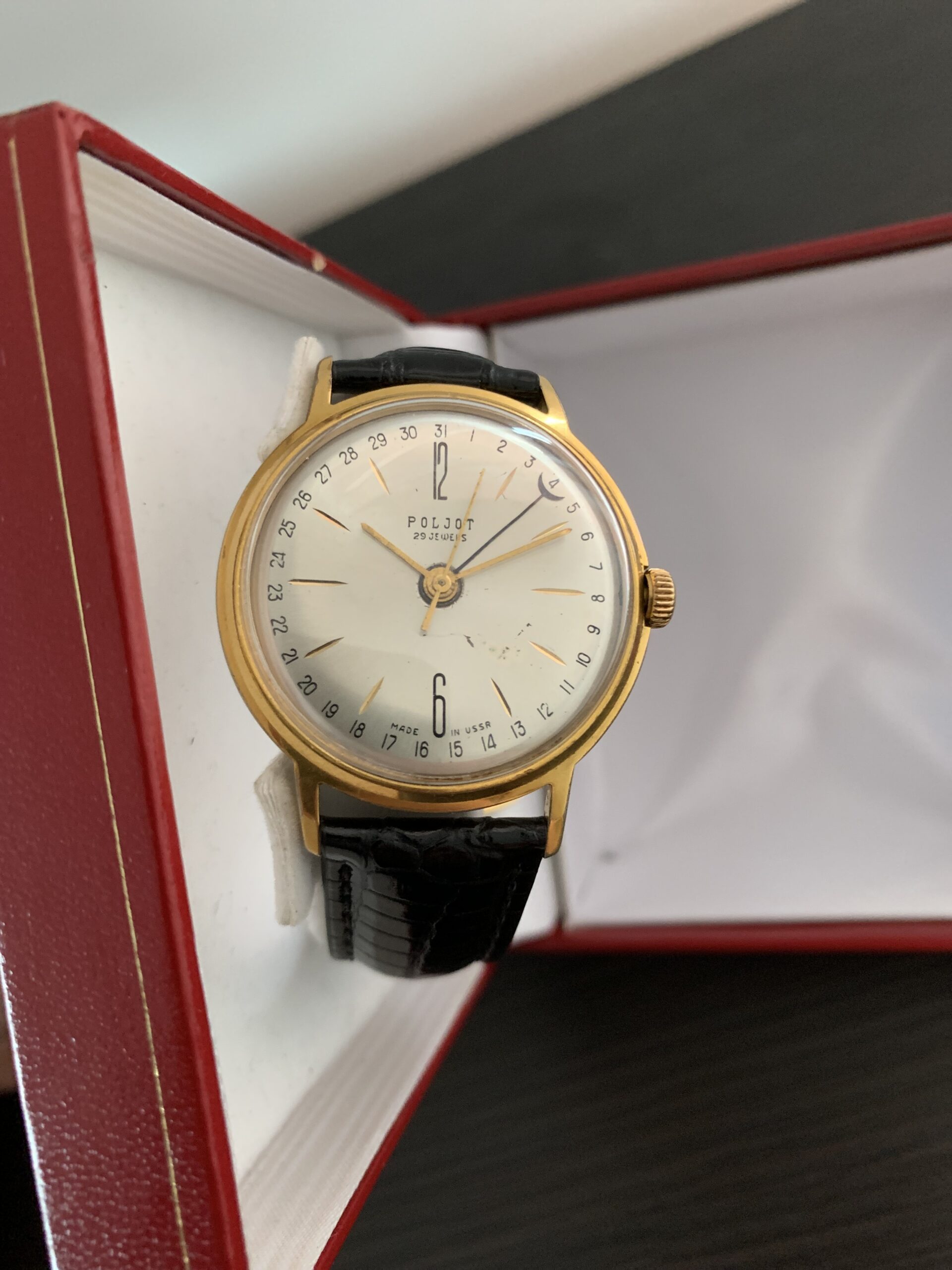
Poljot Cosmos and Kosmos watches occupy a unique place in Soviet horology, distinguished as the only models to feature a true pointer-date complication. Their production numbers remained low, not by intention but by necessity—the intricate movements required exceptional machining precision, making them costly and labor-intensive to manufacture. As a result, authentic examples are highly coveted among collectors today. Unfortunately, that desirability has also fueled a growing market of counterfeits and assembled “franken” pieces. This comprehensive guide is designed to equip you with the expertise and nuance needed to confidently recognize a genuine Poljot Cosmos / Kosmos, ensuring you can navigate the market with clarity and certainty.
Examining the Dial – The First and Most Revealing Indicator
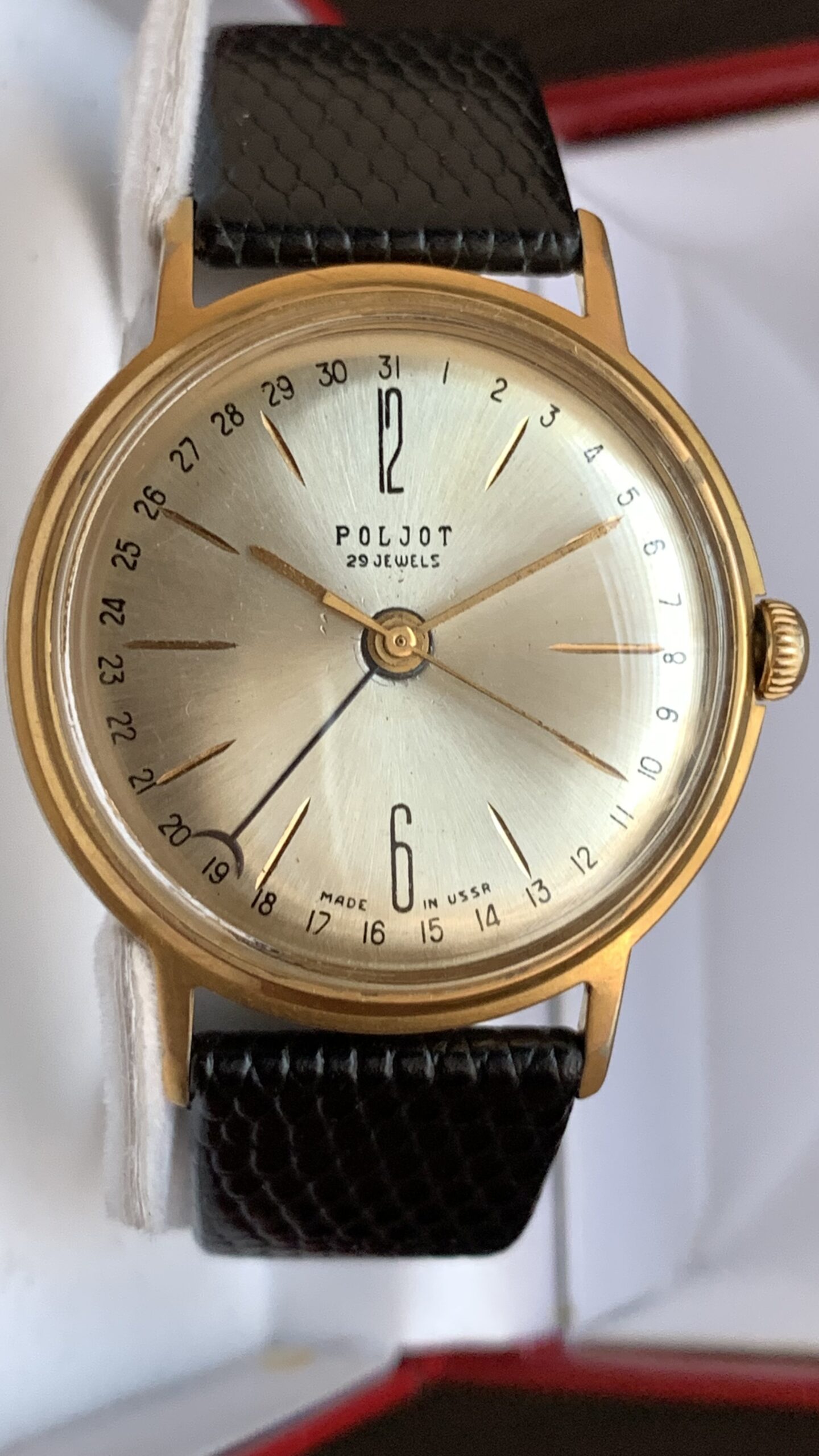
When beginning authentication, the dial offers the most immediate and reliable insights. For the Poljot Cosmos, the task is refreshingly straightforward—no convincing counterfeit dials are known to exist, and the documented originals display consistent, well-established design traits.
The Kosmos, however, presents a more challenging landscape. Numerous counterfeit dials circulate, often created to capitalize on rising collector demand. Fortunately, these imitations are typically crude: inaccurate typography, imprecise printing, and poorly executed sunburst finishes make them relatively simple to recognize once you know what to look for.
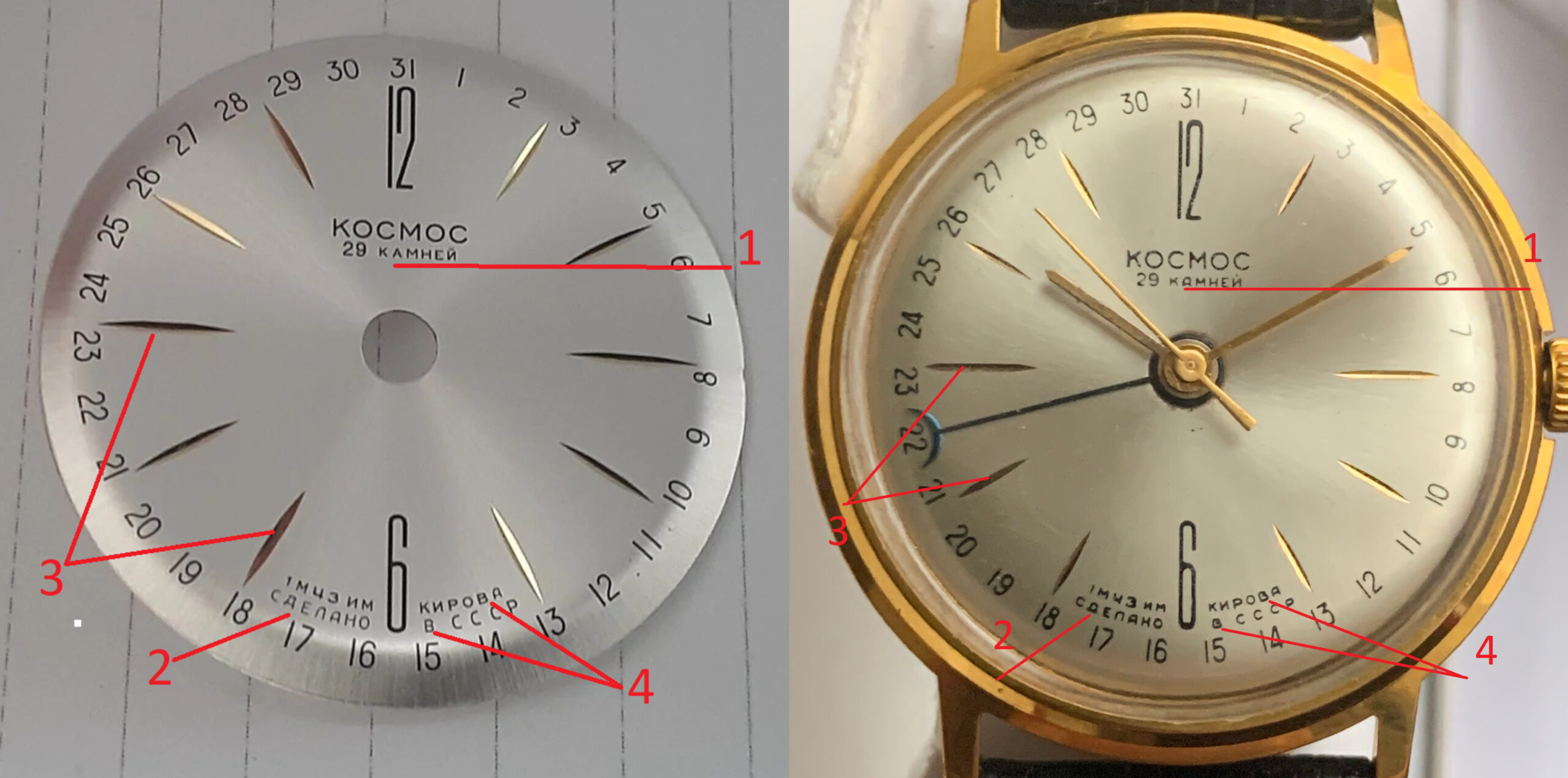
Below, you’ll find a direct comparison to illustrate the key differences between authentic and fabricated dials. The dial on the left is a modern counterfeit, whereas the dial on the right is an authentic original.
Letter “A” in KAMNEI (Jewels) On counterfeit dials, the letter A is sharply triangular, with a distinctly pointed apex. On authentic dials, the A has a softer, rounded upper contour, consistent with period-correct Soviet typography. This is the first detail I examine when assessing a dial. If the “A” is correct, the dial is likely original—though it is still important to verify the additional features below.
Letter “D” in SDELANO (Made) Counterfeit dials typically show the letter D with small “legs” or extended lower strokes. On genuine dials, the bottom of the D is clean and perfectly flat, without protrusions.
Index Cut Proportions While not a universal rule, authentic dials usually exhibit narrower and more finely machined index cuts. Counterfeit versions often have wider or deeper cuts, lacking the precision of the originals.
Letter “B” in B and KIROVA On original dials, the rounded front curve of the B does not touch the vertical back stroke; a small, consistent gap is visible. On counterfeit dials, these elements typically touch or merge, indicating incorrect font geometry.
Understanding the Case – Distinguishing Features Unique to the Poljot Cosmos / Kosmos
Turning our attention to the case, it is important to note that both the Poljot Cosmos and Kosmos employ a slightly modified variant of the 2416 caliber, the same base movement found in Poljot’s 29-jewel date models. Because of this, the movement itself can physically fit into a standard Poljot de Luxe 29 Jewels case—an overlap that often leads to misleading or intentionally assembled pieces on the market.
However, despite this mechanical compatibility, the true Poljot Cosmos and Kosmos cases are entirely unique to these models. Their geometry, finishing, and proportions follow a design language produced specifically for this series and cannot be authentically substituted by generic Poljot cases.
Below are the defining characteristics to examine when assessing case authenticity.
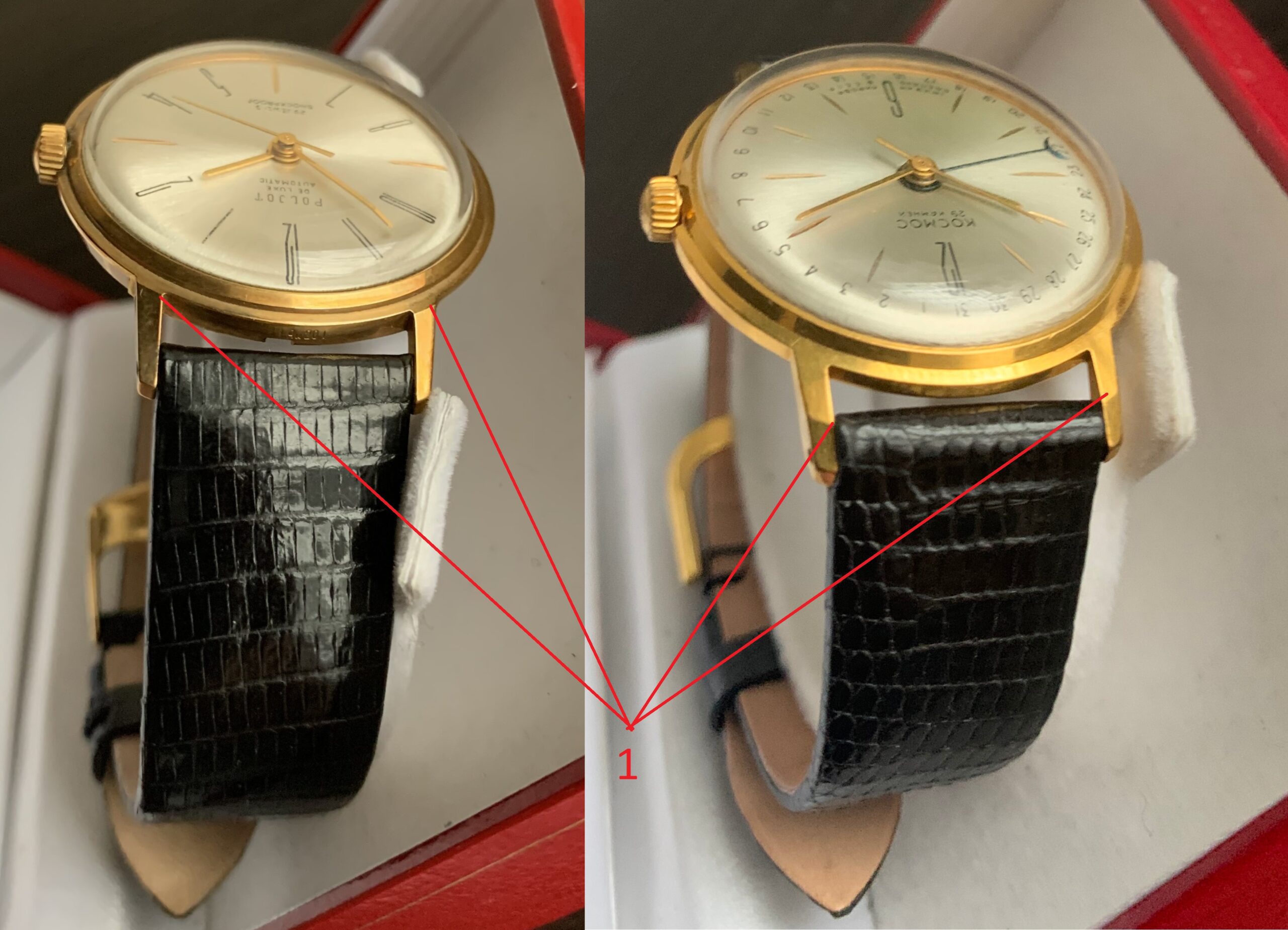
Distinctive Lug Geometry On authentic Poljot Cosmos and Kosmos cases, the lug line breaks away cleanly from the body of the case, creating a characteristic separation in the profile. If this break occurs directly adjacent to the case, rather than extending outward, the case is likely from a standard Poljot 29 Jewels model with the 2415 no-date movement, not from a true Cosmos/Kosmos.
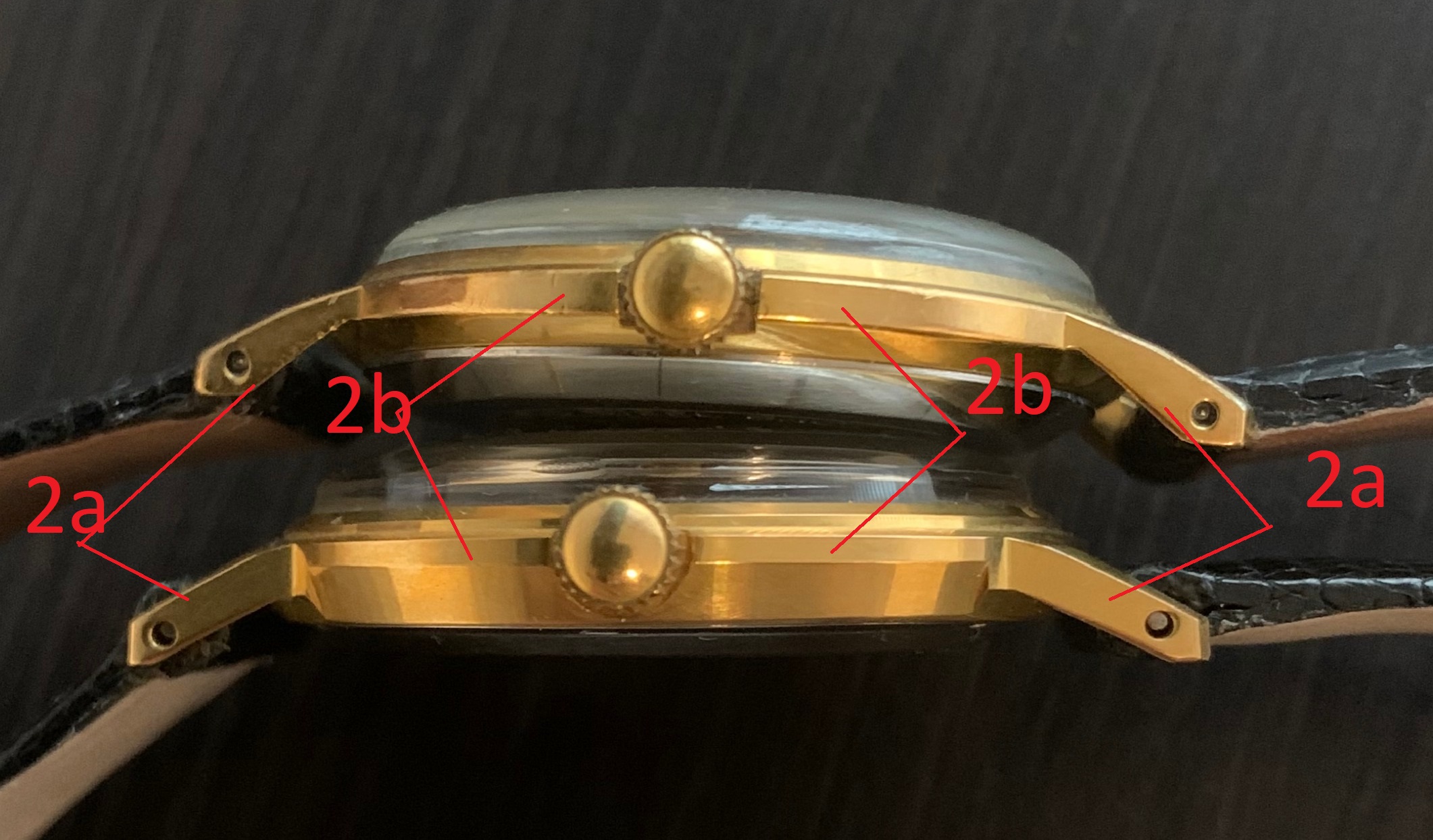
Side-Profile VerificationIn heavily worn examples, the lug line can become difficult to discern. In such situations, examining the case from the side offers a more reliable indicator.
A genuine Cosmos/Kosmos case features:
a) Lugs that flare slightly wider toward the tips
b) A construction composed of three distinct horizontal sections, including a recognizable central band
In contrast, a case originating from a Poljot 2415 model will display uniform, non-flaring lugs and a simpler two-part construction, lacking the central stripe entirely.
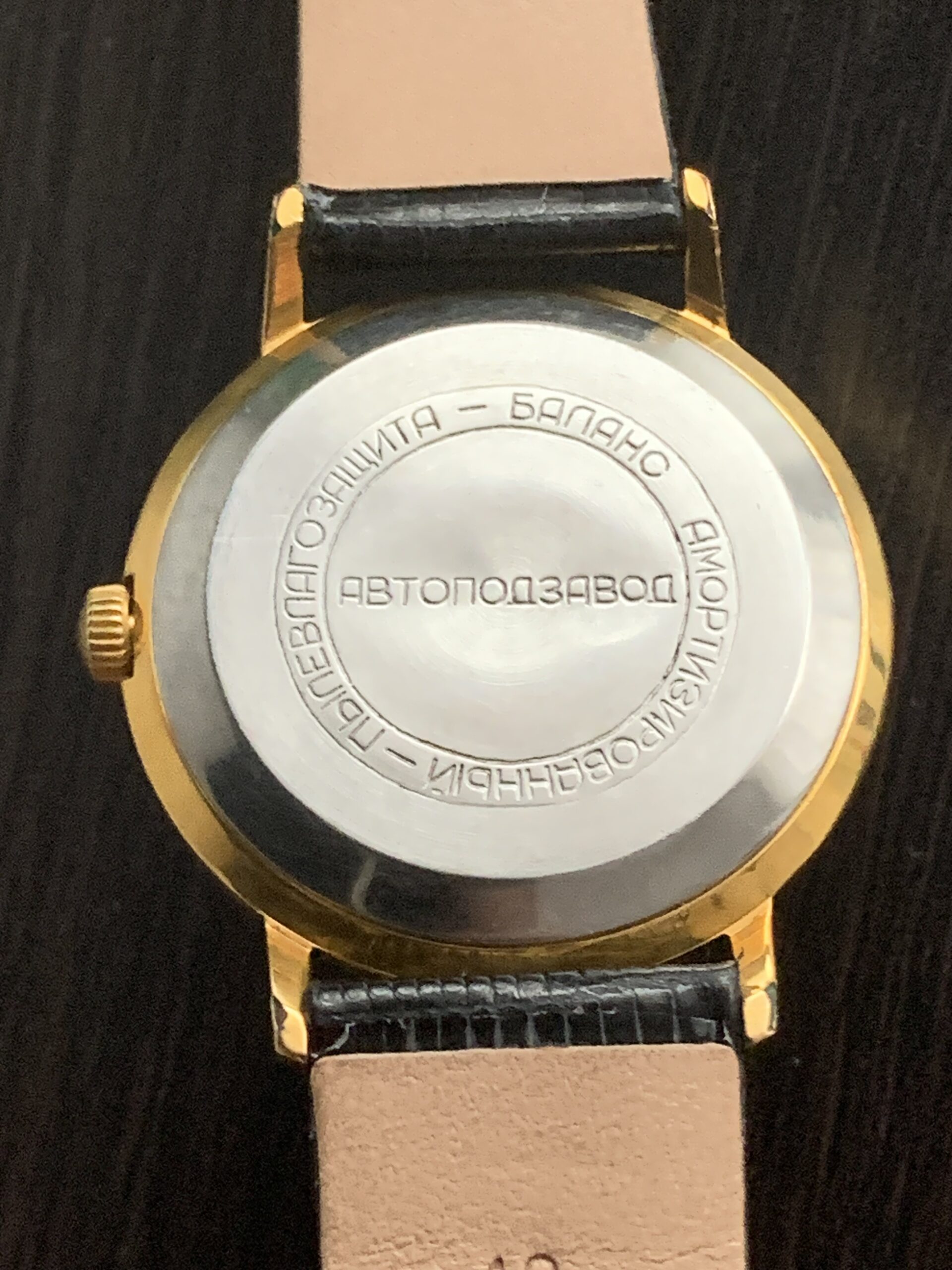
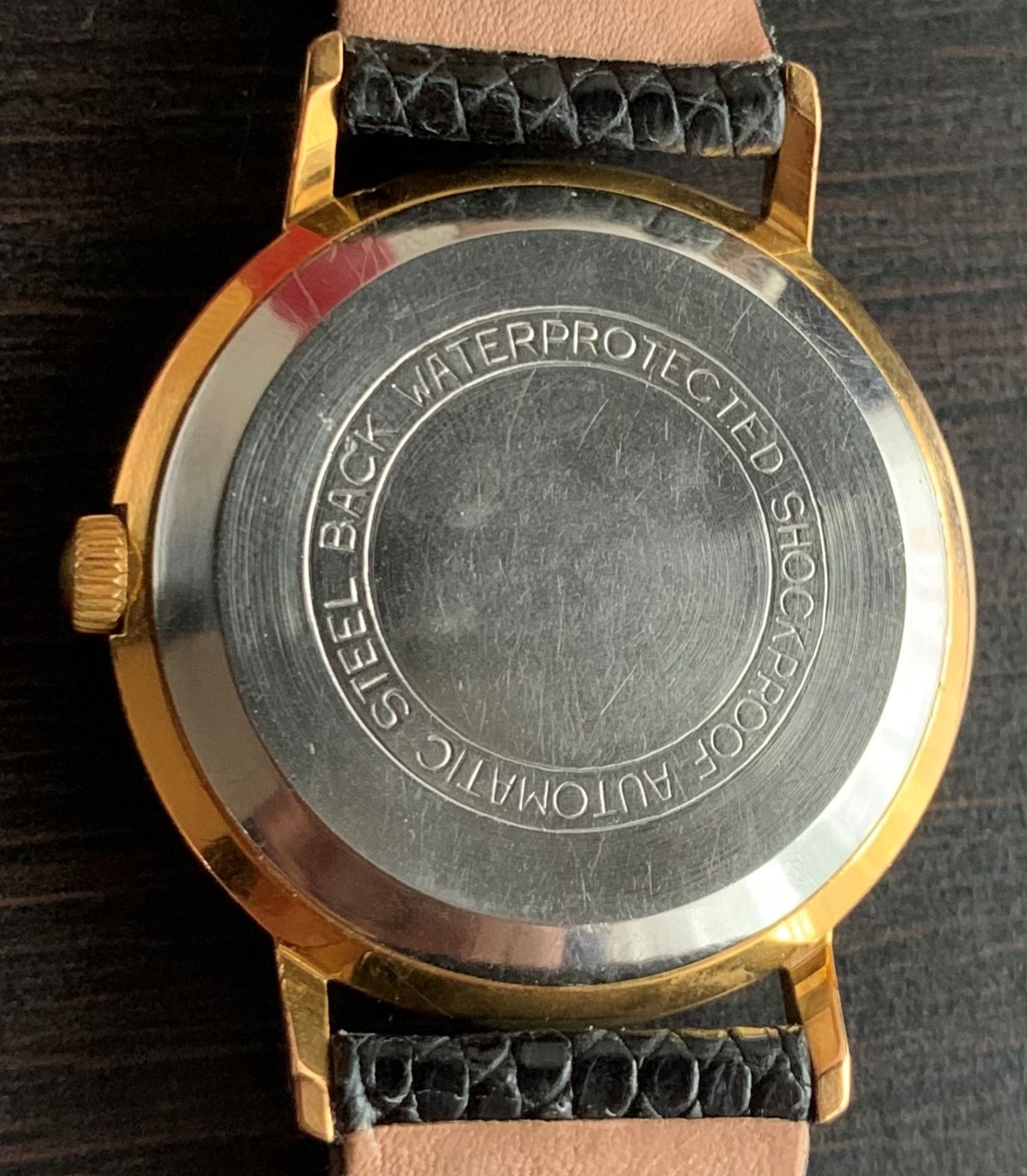
Let’s turn to the case back—an essential element in authenticating both the Poljot Cosmos and Kosmos. For the Kosmos, the rule is unequivocal: the case back must be a snap-on type (never screwed), and the inscription must appear exclusively in Cyrillic. Any deviation, whether a threaded case back or Latin lettering, is a clear indicator of inauthenticity.
The Poljot Cosmos, on the other hand, is occasionally the subject of debate among collectors. Some argue that a screw-down case back may be acceptable for certain variants. However, in the interest of maintaining strict authenticity standards, it is prudent to adopt the more conservative position: a genuine Poljot Cosmos / Kosmos should always feature a snap-on case back.
It is also critical that the language of the case back matches the language used on the dial. Thus:
A Poljot Cosmos should have inscriptions in Latin.
A Kosmos must have inscriptions in Cyrillic.
Alignment between dial language and case-back language is a consistent hallmark of authentic factory production.
Snap on Kosmos case back
Snap on Poljot Cosmos case back
Screwed down Poljot 29j de luxe case back
Identify Poljot Cosmos / Kosmos – Key Movement and Authenticity Traits
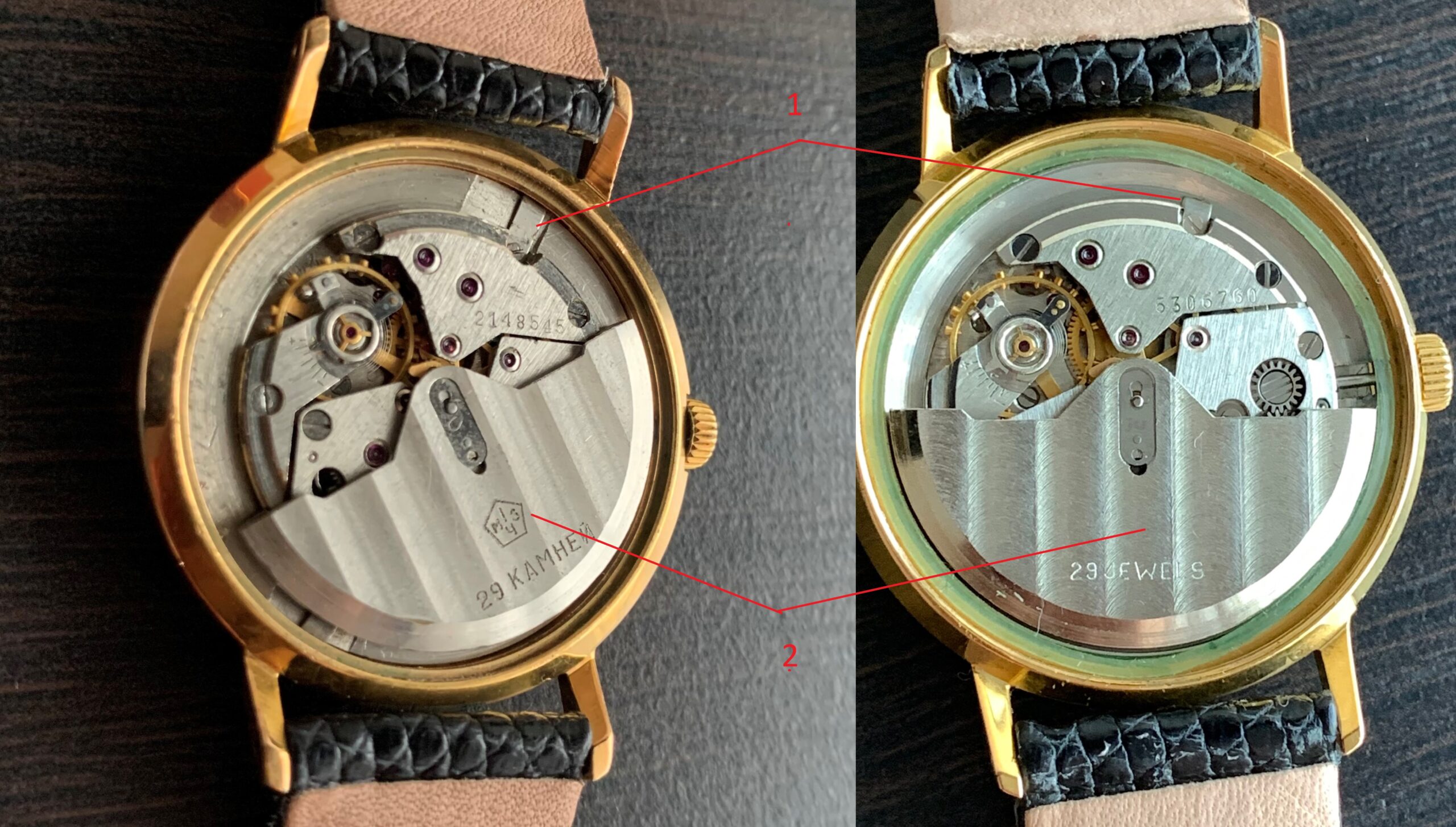
The movement used in the Poljot Cosmos and Kosmos represents the earliest execution of the 2416 caliber—the original form of this mechanism. In these models, the 2416 was engineered specifically to drive a pointer-date hand, making it fundamentally different from the later 2416 variant found in Poljot De Luxe 29 Jewels watches, which uses a conventional date ring and window.
Because the pointer-date version predates the mass-produced De Luxe variant, the two movements are not directly interchangeable without modification. While my watchmaker notes that additional components unique to the early 2416 are required, the sheer number of modern counterfeits suggests that adapting the later 2416 is feasible, though certainly not factory-correct.
1. A further hallmark of authenticity is the mounting system. The Cosmos/Kosmos movement is secured within its case using two screw-on retaining plates, a configuration specific to this model and not shared with the later Poljot De Luxe cases.
2. Another distinguishing characteristic of the early 2416 movement used in the Poljot Cosmos and Kosmos is the presence of the 1MChZ (1MFW) factory logo on the rotor. This marking is a reliable indicator of the original, early-production caliber. By contrast, the later 2416 movements found in Poljot De Luxe 29 Jewels models rarely feature this rotor engraving, making it a valuable detail when evaluating authenticity.
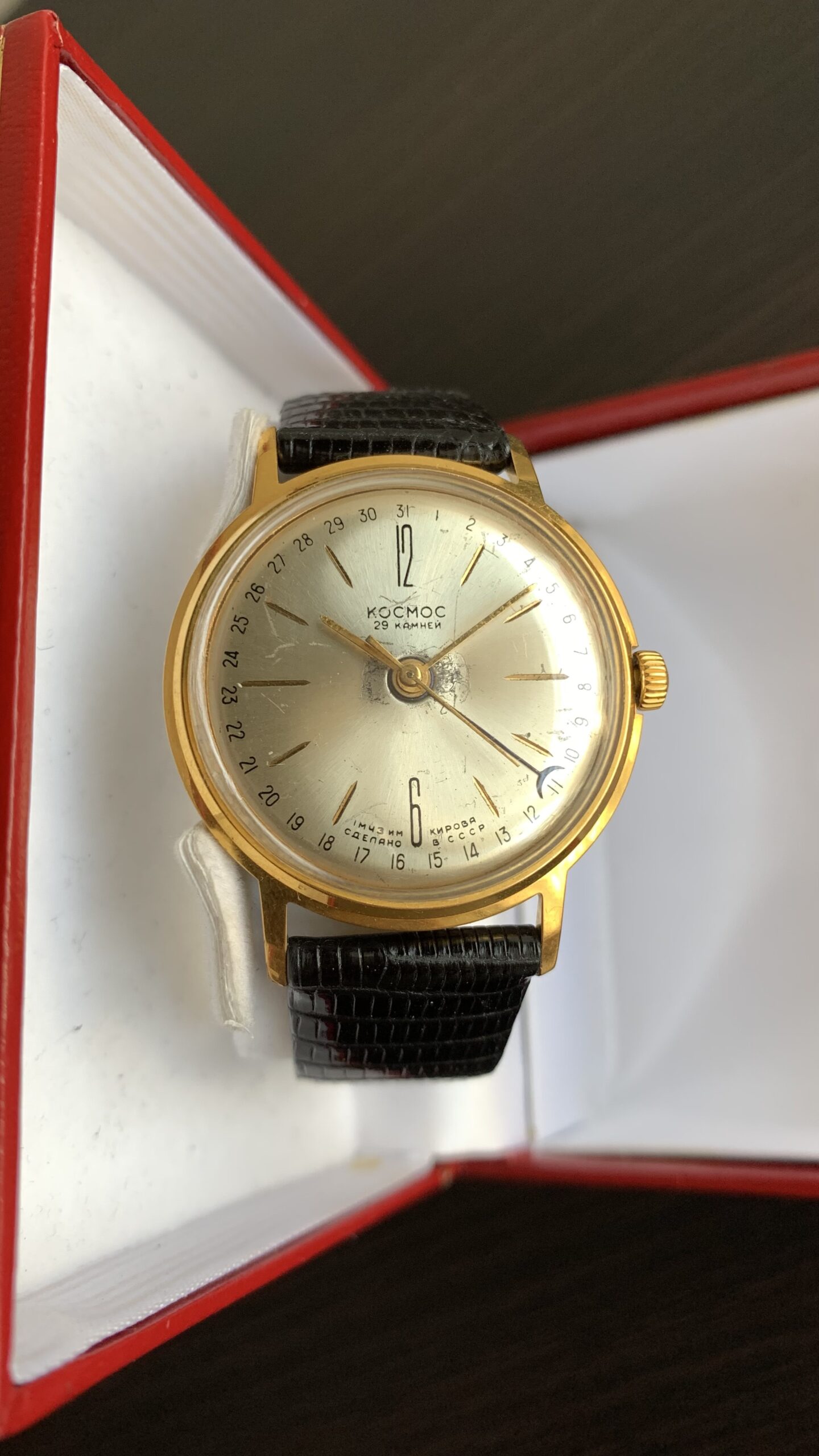
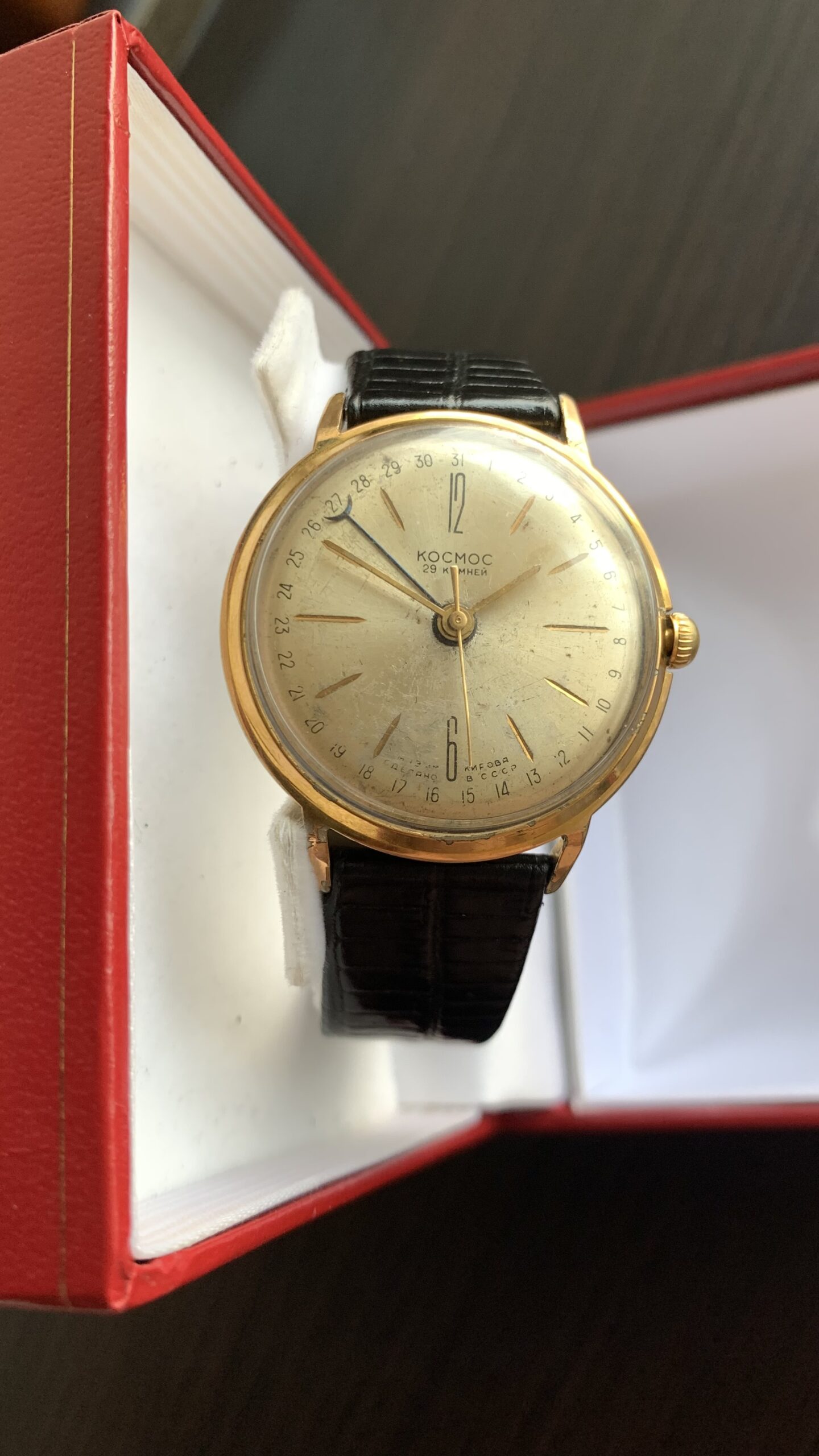
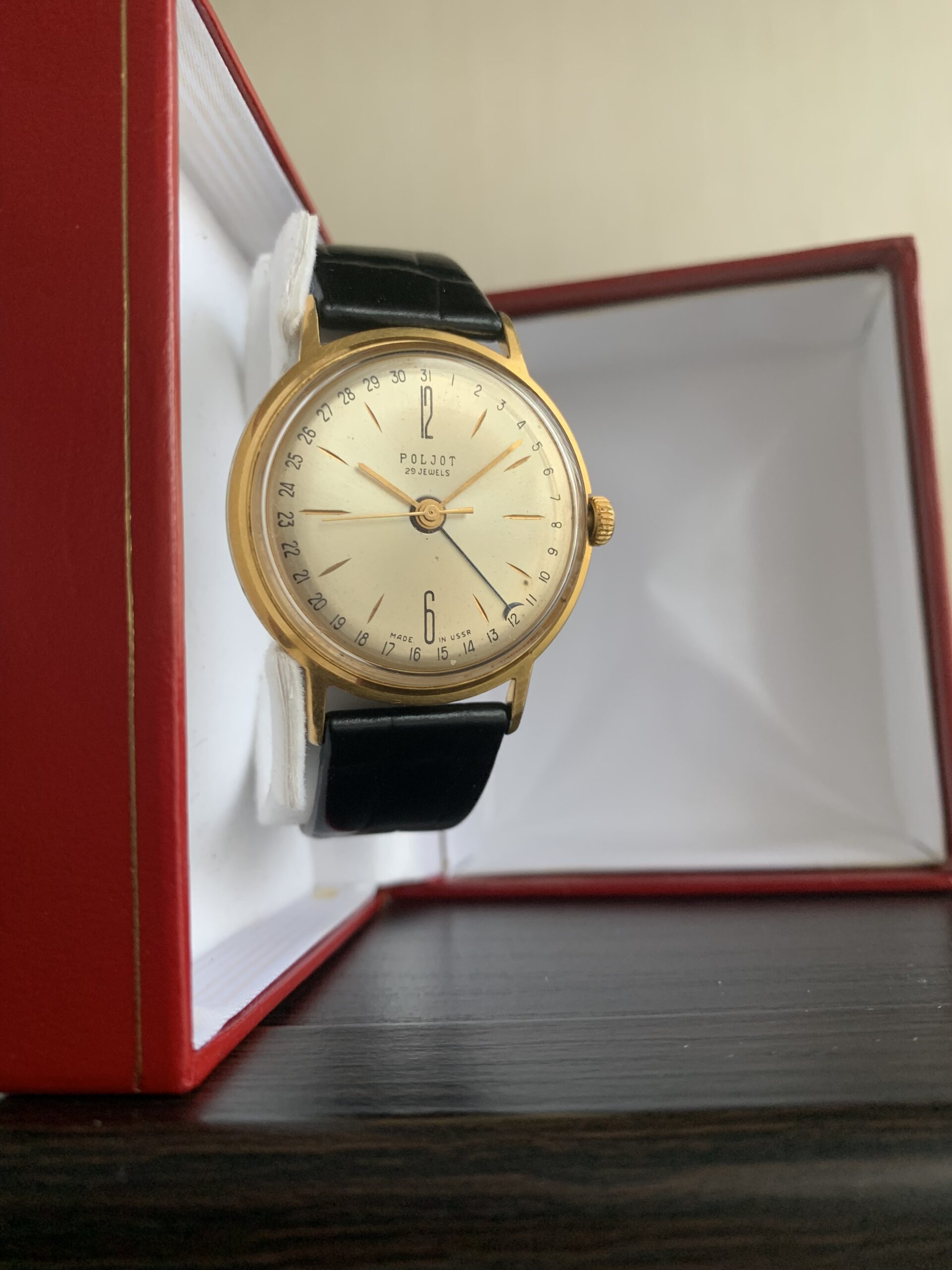
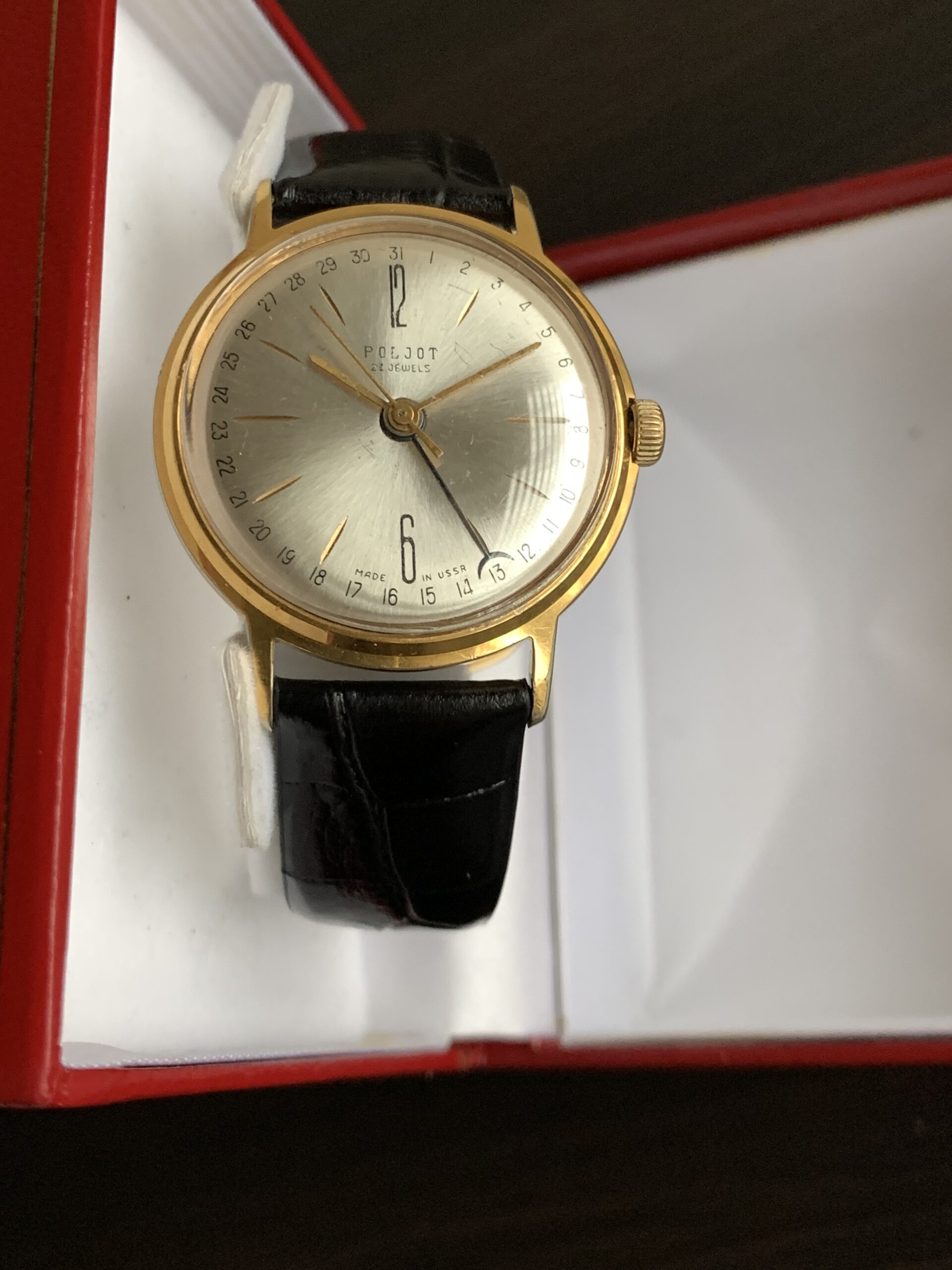
Poljot Cosmos / Kosmos models rank among the more valuable Soviet-era watches, and their counterfeits often command prices comparable to authentic pieces. For this reason, it is essential to verify authenticity before making a purchase. Fortunately, once you know the distinguishing features, identifying fakes and “frankens” becomes relatively straightforward. Below, you will find additional examples of genuine dials to assist in your evaluation.