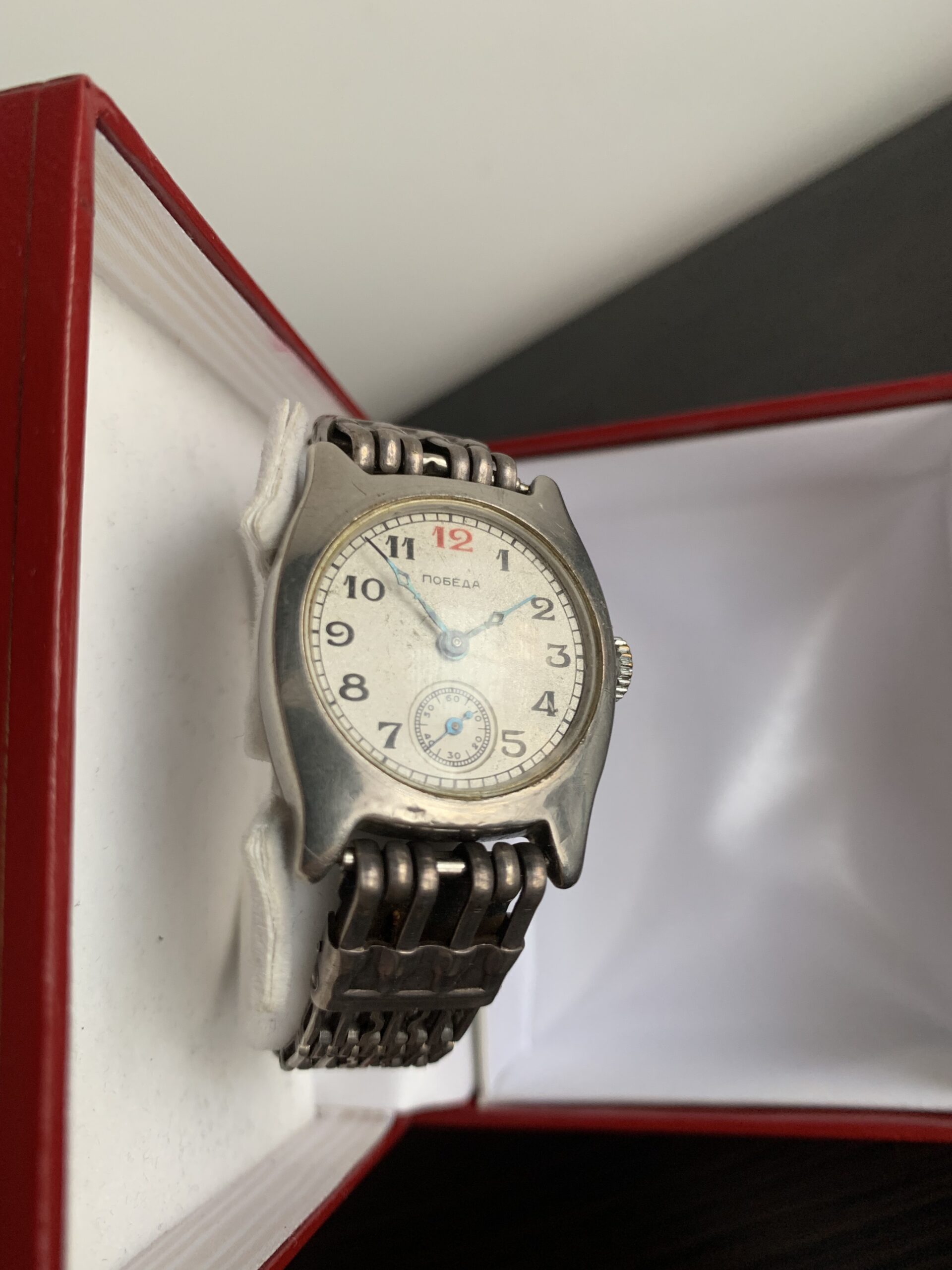
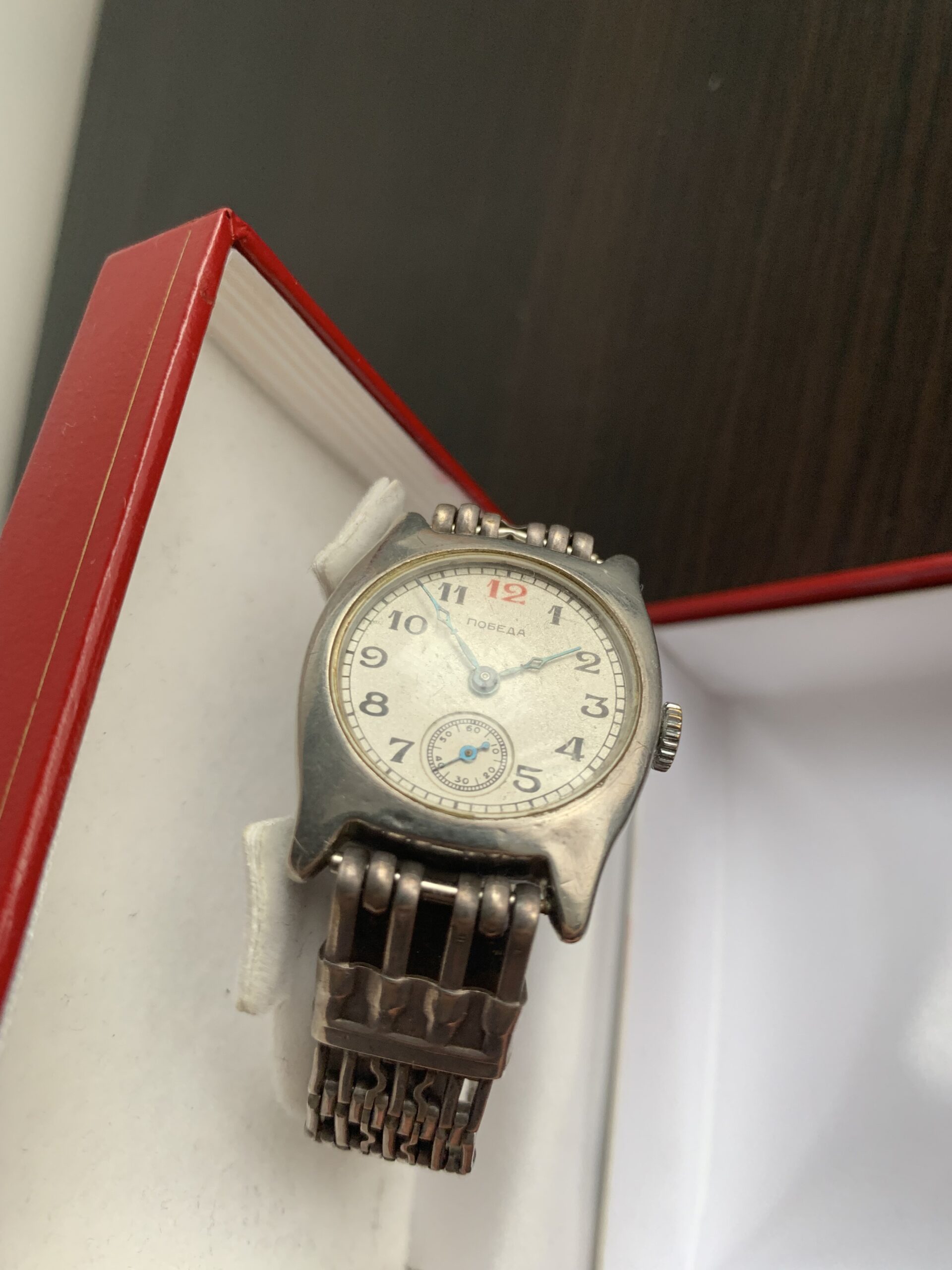
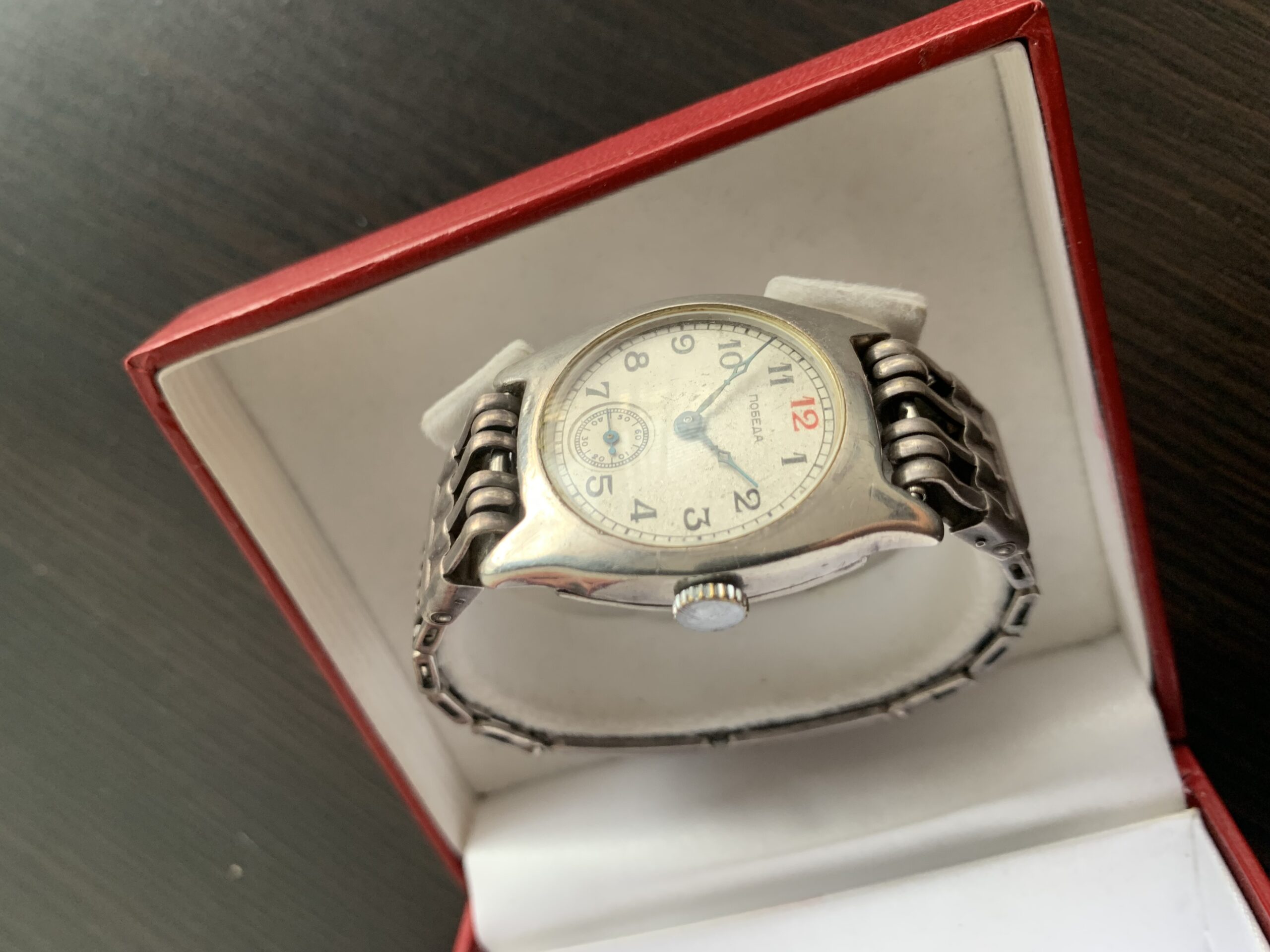
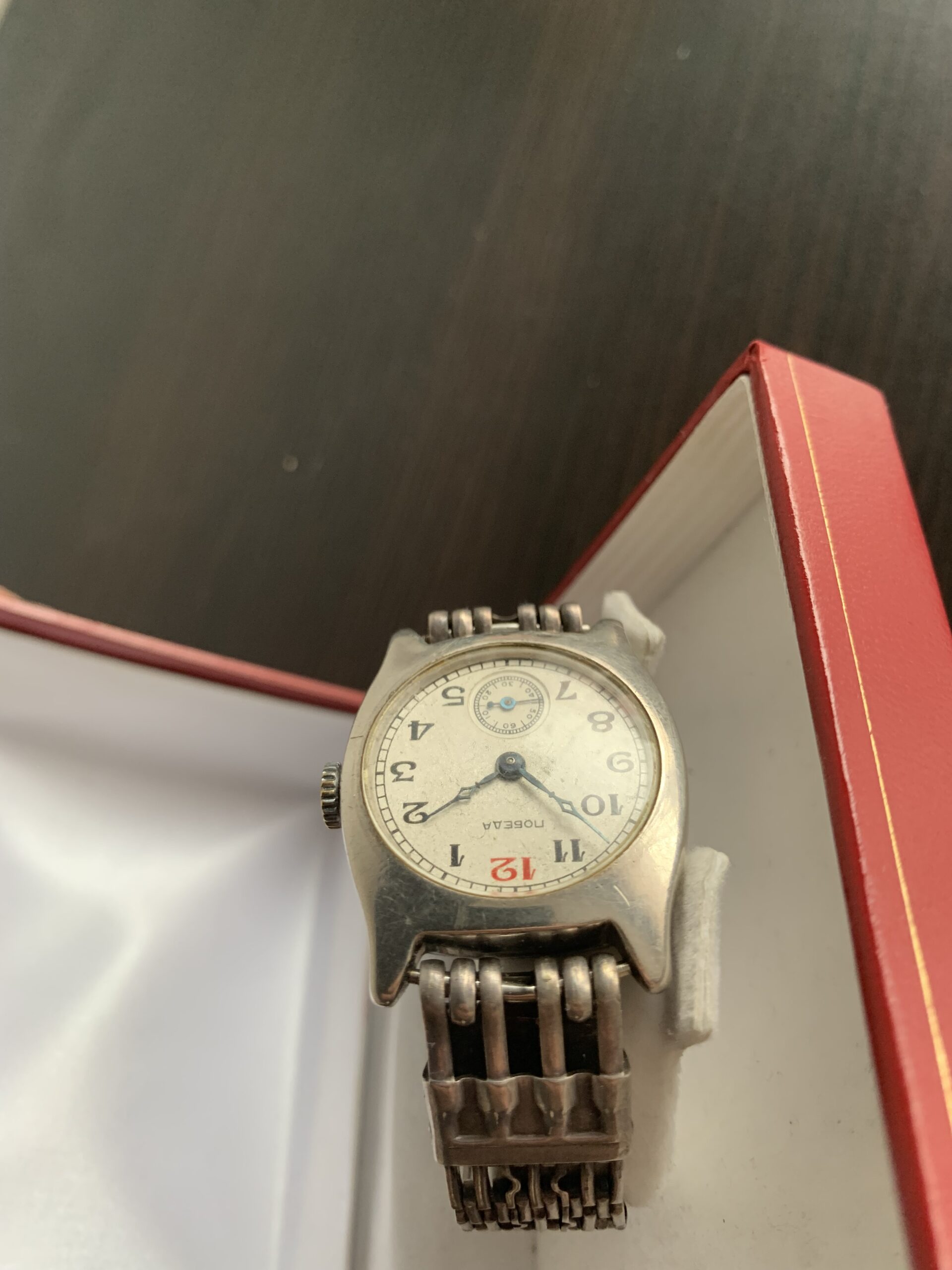
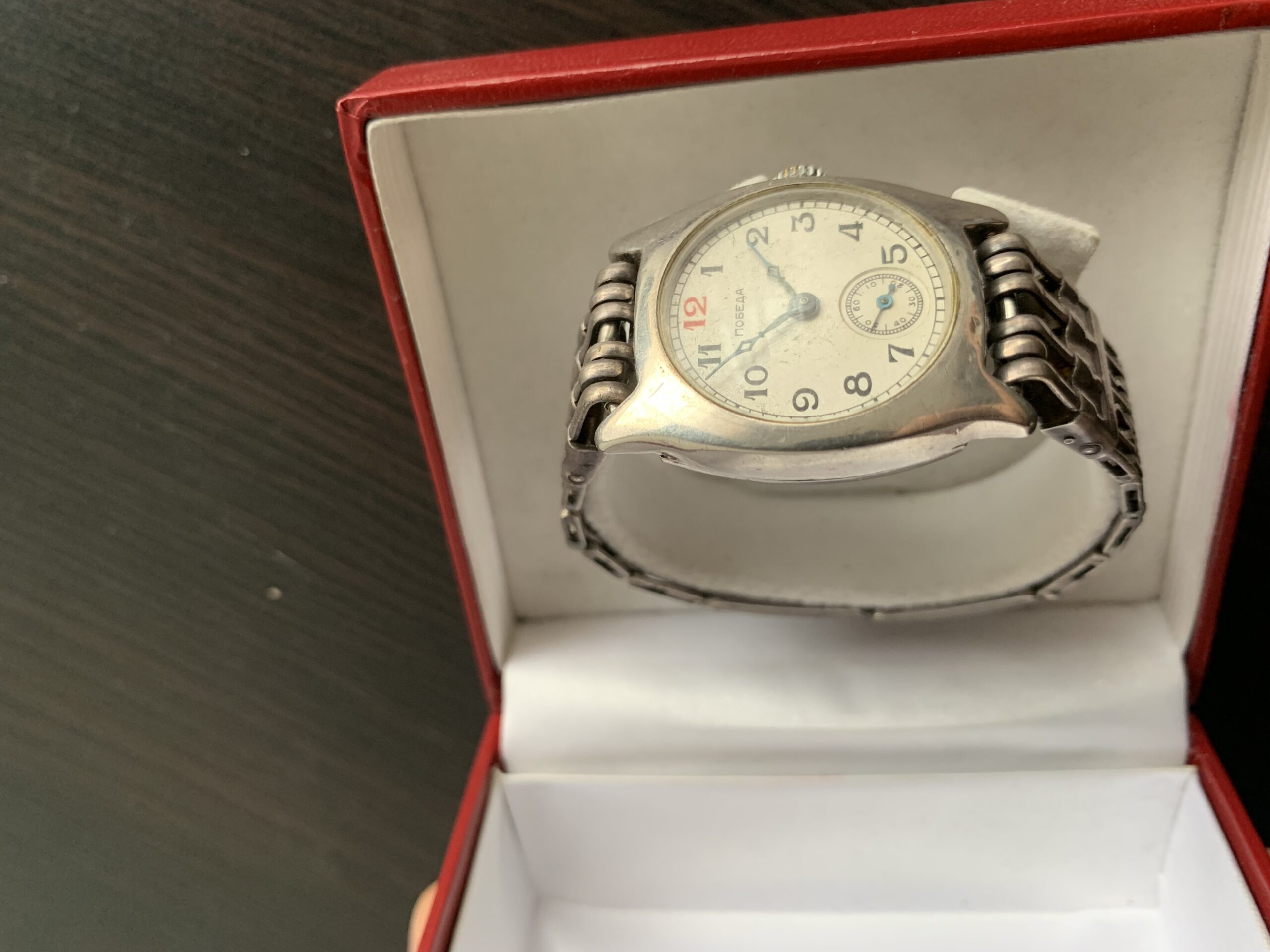
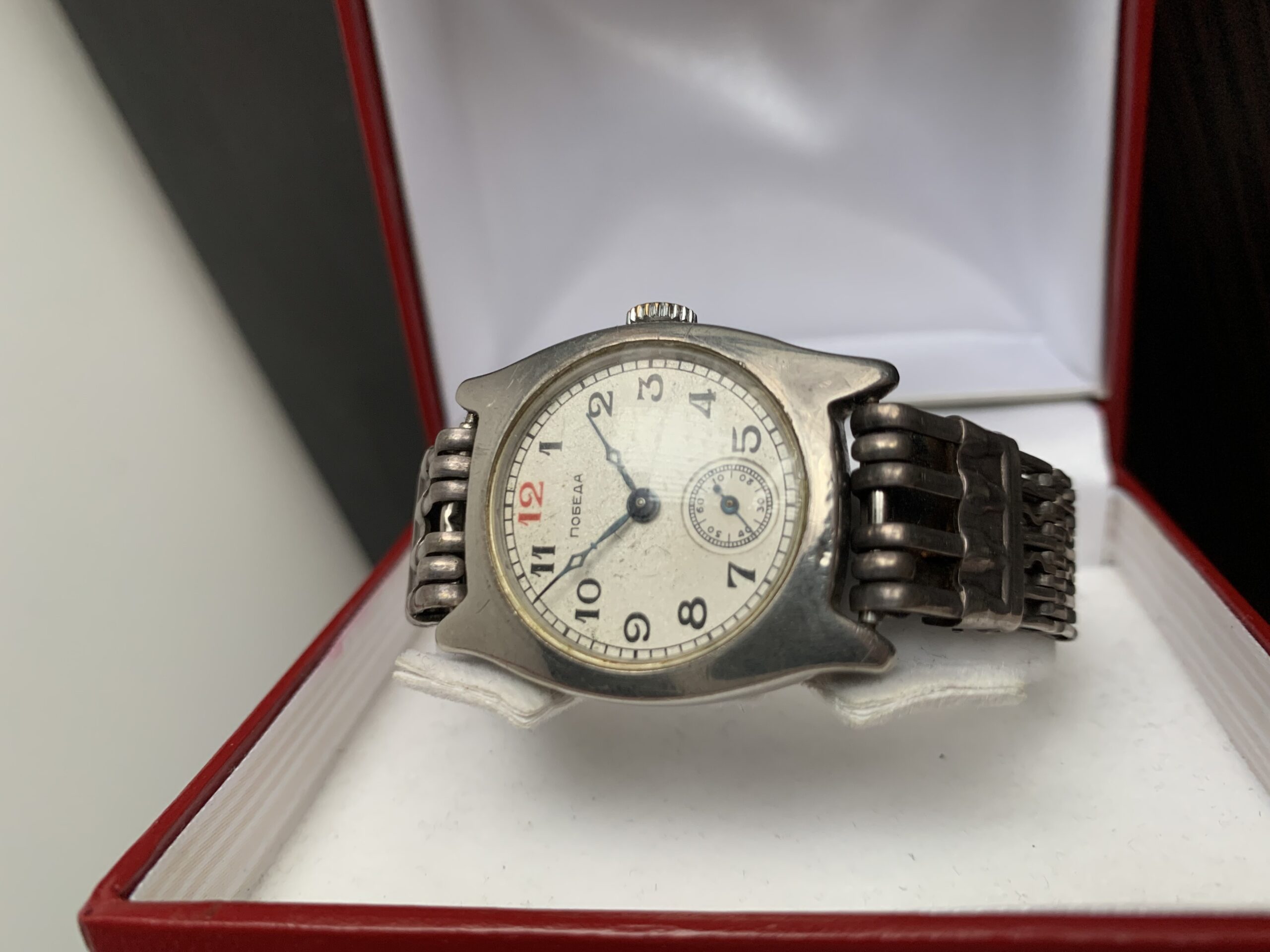
The Pobeda watch occupies a foundational and symbolic position in the history of Soviet horology, widely recognized as the first mass-produced wristwatch design developed in the post-war Soviet Union. Its creation was closely aligned with broader national efforts aimed at reconstruction, self-reliance, and technological renewal following the devastation of the Second World War. Conceived not merely as a consumer product but as a statement of progress, the Pobeda was intended to embody reliability, accessibility, and functional elegance for a broad segment of the population.
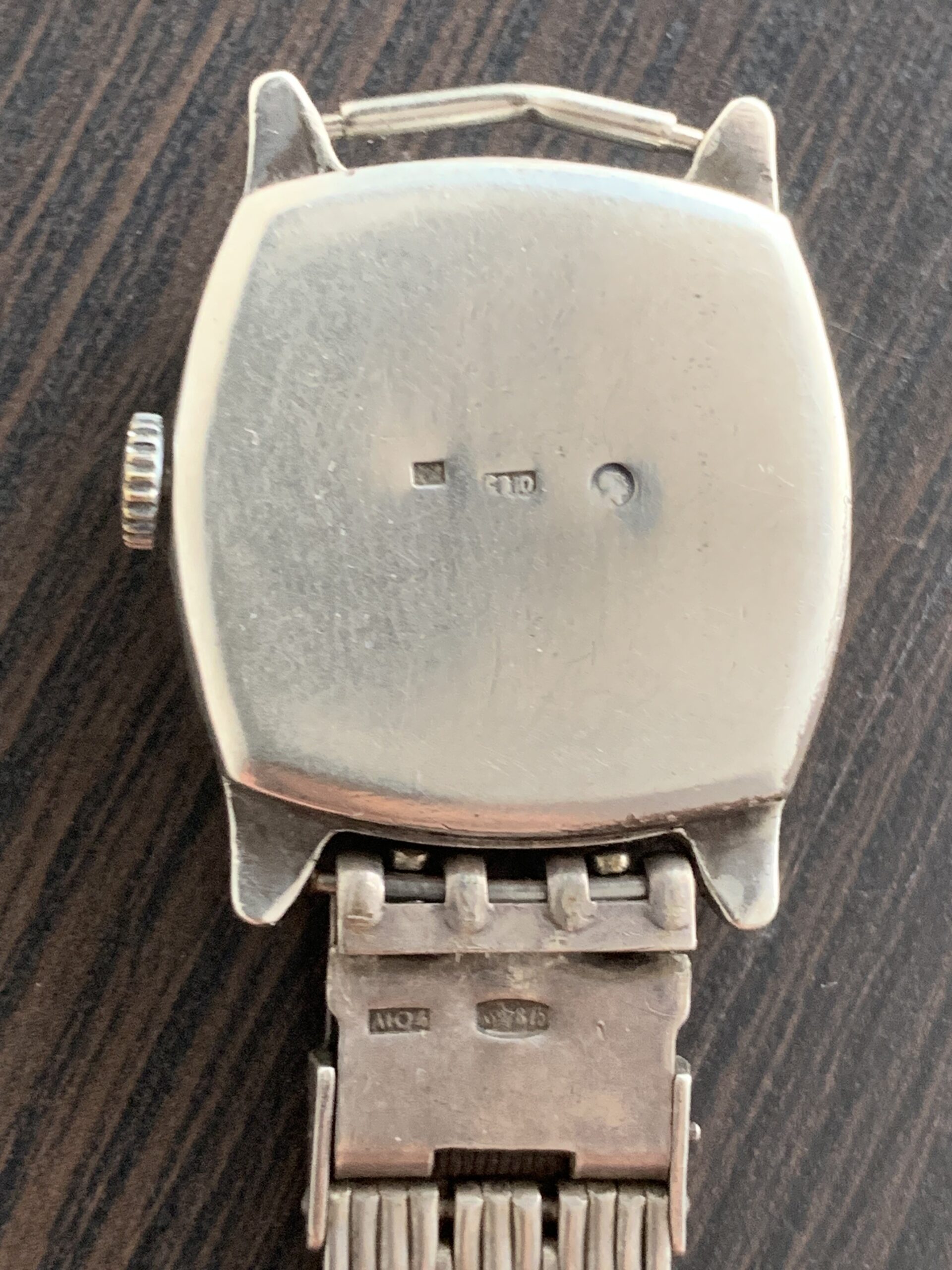
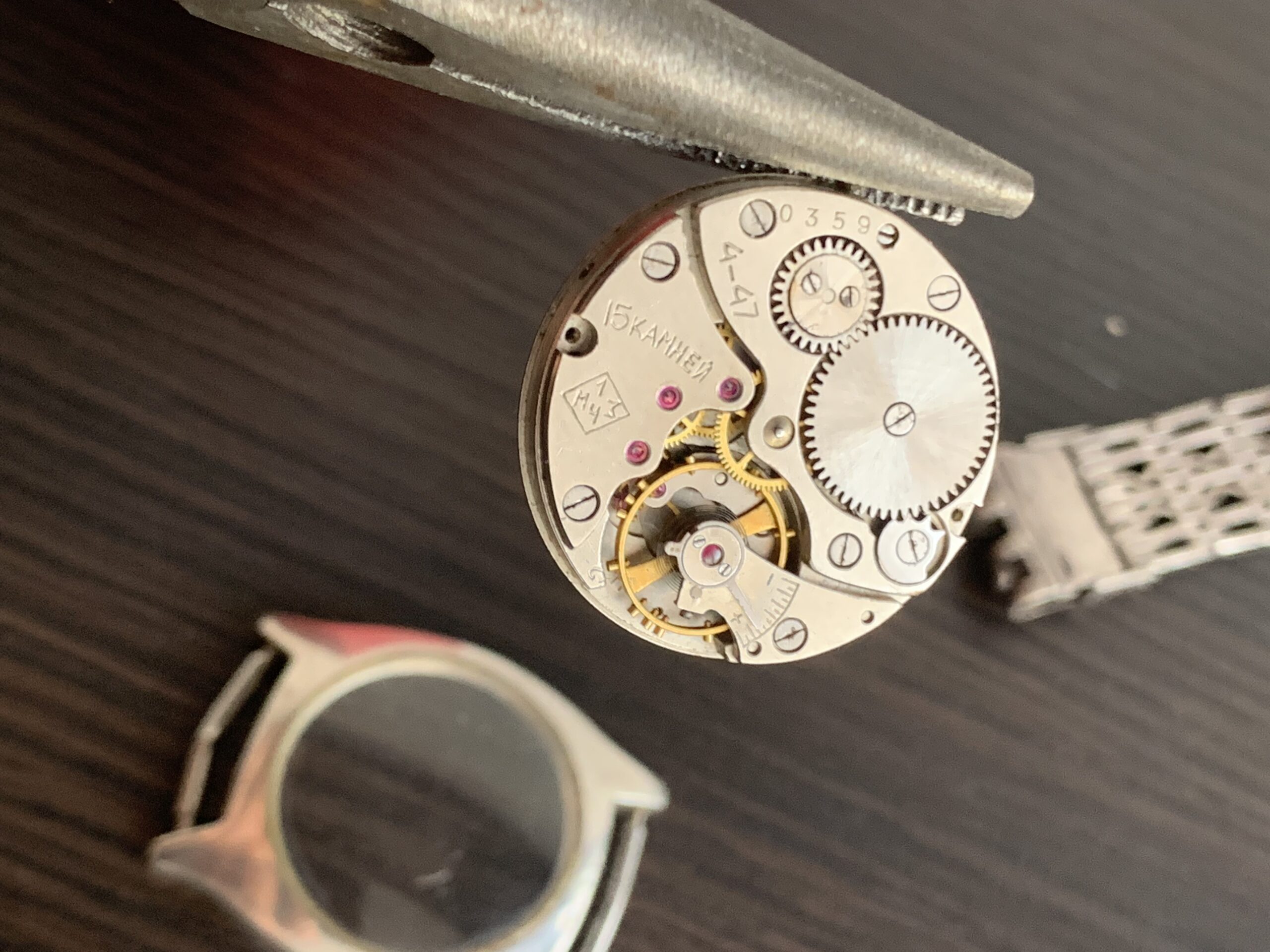
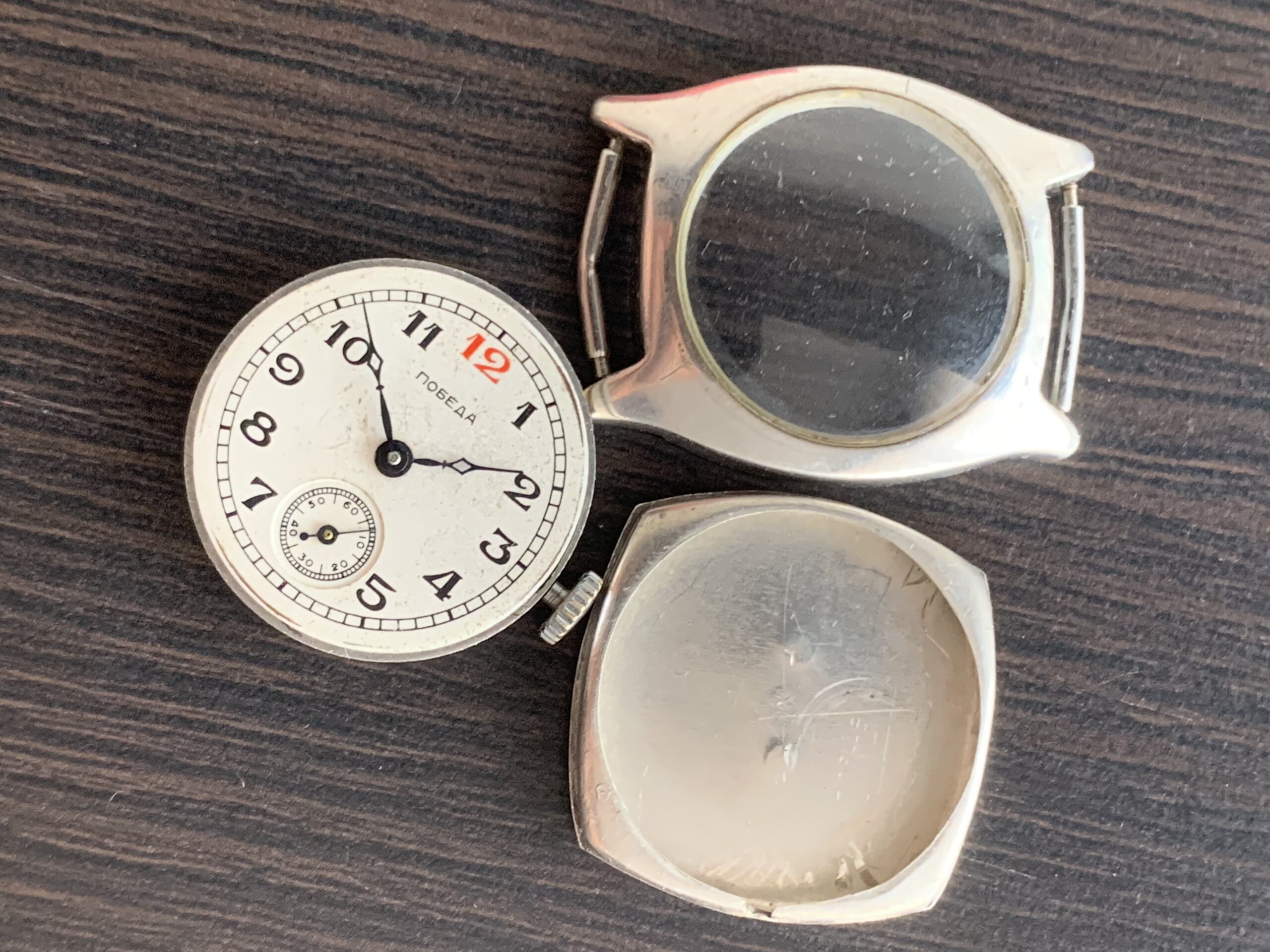
From a design and engineering standpoint, the Pobeda emphasized technical simplicity paired with a restrained, utilitarian aesthetic—qualities that ensured durability and ease of manufacture under challenging economic conditions. While the overwhelming majority of Pobeda watches were produced in base-metal or gold-plated cases to meet mass-production goals, a very limited and exceptional group was housed in solid silver. These silver case examples stand apart as a remarkable anomaly within the Pobeda program, and today they are regarded by collectors as among the rarest and most historically significant Pobeda variants ever produced. The watch shown in the photographs bears a “4-47” marking on the movement, indicating that it was manufactured in the fourth quarter of 1947.
Pobeda Silver Case as a Special-Production Variant
Pobeda silver case watches were never intended for widespread civilian distribution and clearly stood apart from the standard production models. Their manufacture appears to have been highly limited, likely confined to the earliest production phases, special allocations, or presentation pieces intended for officials, institutions, or individuals of particular distinction. Unlike the utilitarian base-metal and plated cases that defined the Pobeda’s mass-market role, silver represented a deliberate and costly choice.
In the economically restrained post-war environment, the use of solid silver—an expensive and non-essential material—was highly unusual. Its inclusion suggests that these watches occupied a distinct and elevated position within the Pobeda program, one that balanced functional purpose with symbolic value. As such, silver case Pobeda watches can be seen as bridging the gap between practicality and prestige.
A Rare Survivor of Early Soviet Watchmaking
Today, surviving Pobeda silver case watches are exceptionally rare, the result of both limited original production and the passage of time. Many examples have not endured in their original form, having been lost, melted down for their precious metal content, or extensively modified during decades of use and repair. In the austere post-war years, the intrinsic value of silver often outweighed the perceived importance of preserving these watches as historical objects, further contributing to their disappearance.
Consequently, genuinely original silver case Pobeda watches—those retaining intact silver hallmarks, correct factory components, and period-appropriate finishing—are highly coveted by advanced collectors. Such pieces offer far more than mechanical interest; they serve as tangible artifacts from the earliest phase of Soviet watchmaking, reflecting both material constraints and design ambitions of the era. For these reasons, the silver case Pobeda is widely regarded as a cornerstone reference within any serious Pobeda-focused collection and a lasting testament to the formative years of Soviet horology.